Why Your Audi's Tire Pressure Light Comes On the First Cold Morning
Cold air lowers tire pressure, and the light is usually the first sign. Here is how to check it, refill and reset.
Why Your Audi's Tire Pressure Light Comes On the First Cold Morning
Colin Joseph – 11/10/2026
Is It Safe to Drive With the Audi Tire Pressure Light On?
Usually yes, for a short, careful drive to fill your tires. A steady yellow tire pressure warning means at least one tire is low enough to need air, not that it's flat. Under the federal tire pressure monitoring standard, the light has to come on when a tire is 25% or more below the recommended pressure. That's low enough to matter, but rarely an emergency.
Before you pull out, walk around the car and look at all four tires. Use this quick guide:
- Tires look normal and the car drives normally: drive gently to the nearest gas station or air pump and fill them.
- One tire looks visibly low or flat, or the car pulls, shakes or feels off: don't drive on it. Use your spare or call roadside assistance.
- The light flashes for about a minute, then stays on: according to NHTSA, that pattern points to a problem with the monitoring system itself. Check your tires with a gauge, then schedule a system inspection. For the other symbols on your dash, see our Audi dashboard warning lights guide.
Why the Tire Pressure Light Comes On When It's Cold
Air shrinks as it cools, so the air inside your tires takes up less room on a cold morning and pressure drops. Michelin puts the loss at about 1 PSI for every 10°F drop. A 20°F swing costs roughly 2 PSI. If your tires were set on a 68°F fall afternoon and the next morning is 38°F, that's about 3 PSI gone without a single leak.
That's also why the light sometimes goes out on its own. NHTSA notes that it can come on during a cold morning and switch off once driving warms the tires and the pressure climbs back up. The light going off doesn't mean the problem is solved, though. The tires will be low again tomorrow morning until you add air.
When the Light Won't Go Off
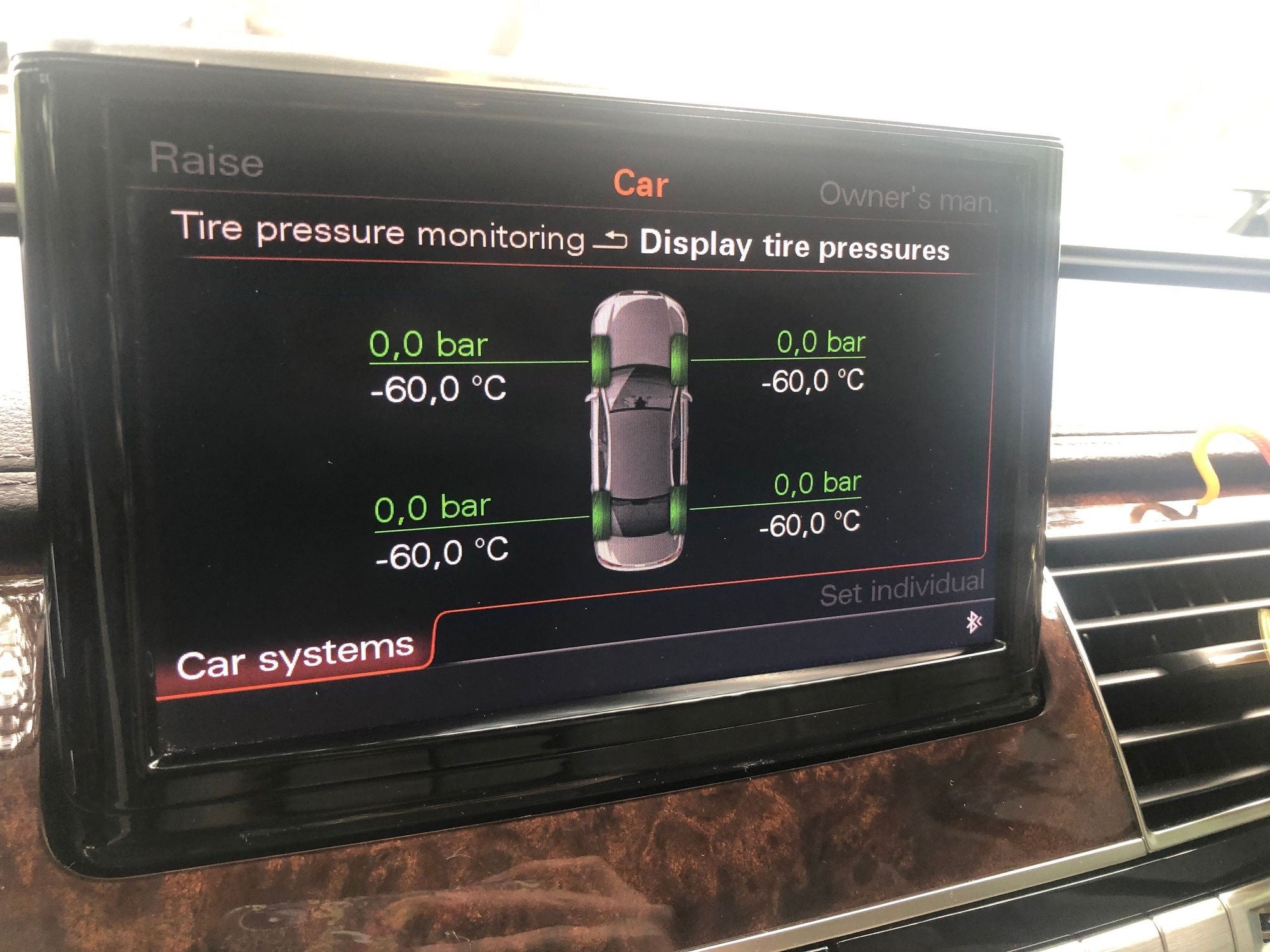
If the light keeps coming back after you fill the tires and reset the system, something other than the cold is going on. The most common causes are:
- A slow leak. A nail, a damaged valve stem or a bent rim from a pothole can let air out slowly over days. If the same tire keeps reading low, have it inspected.
- A system fault. If the light flashes and then stays on, the issue is the monitoring system, such as a failed sensor on models that use them. Your tires may be fine, but the system needs a technician.
- A recent tire or wheel change. After a seasonal swap or a new set of tires, the system may need to be reset or relearned.
If any of these sound familiar, schedule a service visit and the team can check your tires, valve stems and system in one appointment.
North Shore Winter Driving and Your Tires
North Shore winters are hard on tires. Freeze-thaw cycles open potholes along Northern Boulevard and Port Washington Boulevard, and a single bad hit can bend a rim or damage a valve stem enough to start a slow leak. Wet, salty slush on the LIE and the Cross Island Parkway also hides road debris.
Make a habit of checking your tire pressure every month, especially after a big temperature drop. If you're deciding whether your tires are ready for winter, read Do You Need All-Weather Tires on Your AWD Audi?, and see the Audi winter checklist for everything else to check before the season.
Get Your Tires Checked at Audi Great Neck
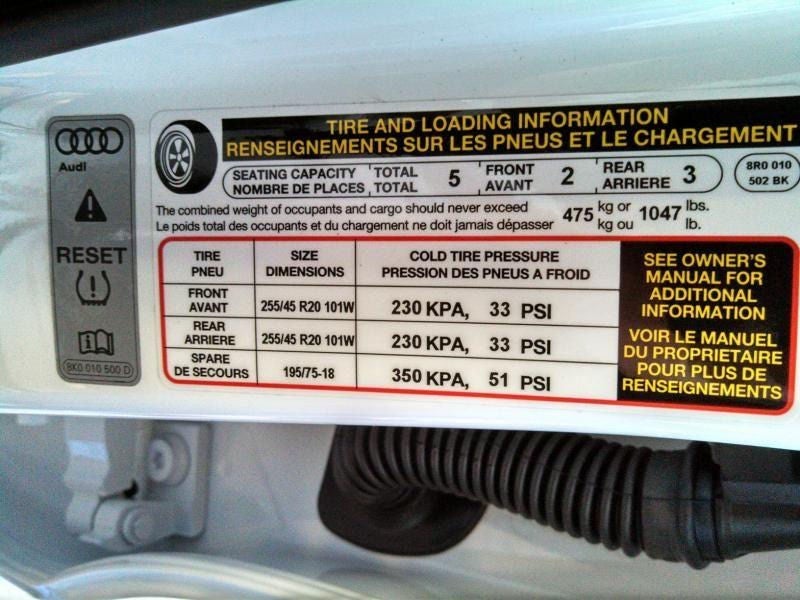
A tire pressure light on the first cold morning usually just means the air in your tires shrank overnight. Fill the tires to the door jamb pressure, reset the system and keep an eye on it. If the light keeps coming back or starts flashing, the Audi Great Neck service team can find the cause.
Audi Great Neck
795 Northern Blvd, Great Neck, NY 11021
Service: 516-262-3387
Hours and directions
FAQ: Audi Tire Pressure Light
Cold air takes up less space, so tire pressure drops as the temperature falls, by about 1 PSI for every 10°F. A cold snap can push a tire below the warning point overnight even without a leak. Filling the tires to the pressure on your door jamb usually fixes it.